

Pillars of Eternity II: Deadfire review: A strong ship in shallow waters - schwartznothestal
The foundation was laid for Pillars of Timelessness II: Deadfire to beryllium a spectacular sequel. Its predecessor, 2015's Pillars of Timelessness, did the heavy lifting. It proved Obsidian could resurrect the spirit of the nonagenarian Infinity Engine RPGs for modern times, underpinned by modern technology. Flawed, sure—the original Pillars of Eternity had its problems. But with the engine highly-developed and the underlying rules in place, the stage seemed set for a daring subsequence, if non Baldur's Gate II-sized at least one that felt that grand in scope.
And for the prototypical 25 Oregon 30 hours of Pillars of Infinity II($50 on Green Man Gaming and Steamer), that's what I thought we'd got. You can see it in the video we made to a higher place. Information technology starts effectual. Poke around the seams though, and you'll observe an identity crisis—a game that's not sure whether to plate consume Oregon scale up, and ends up caught awkwardly in between.
Yo ho ho
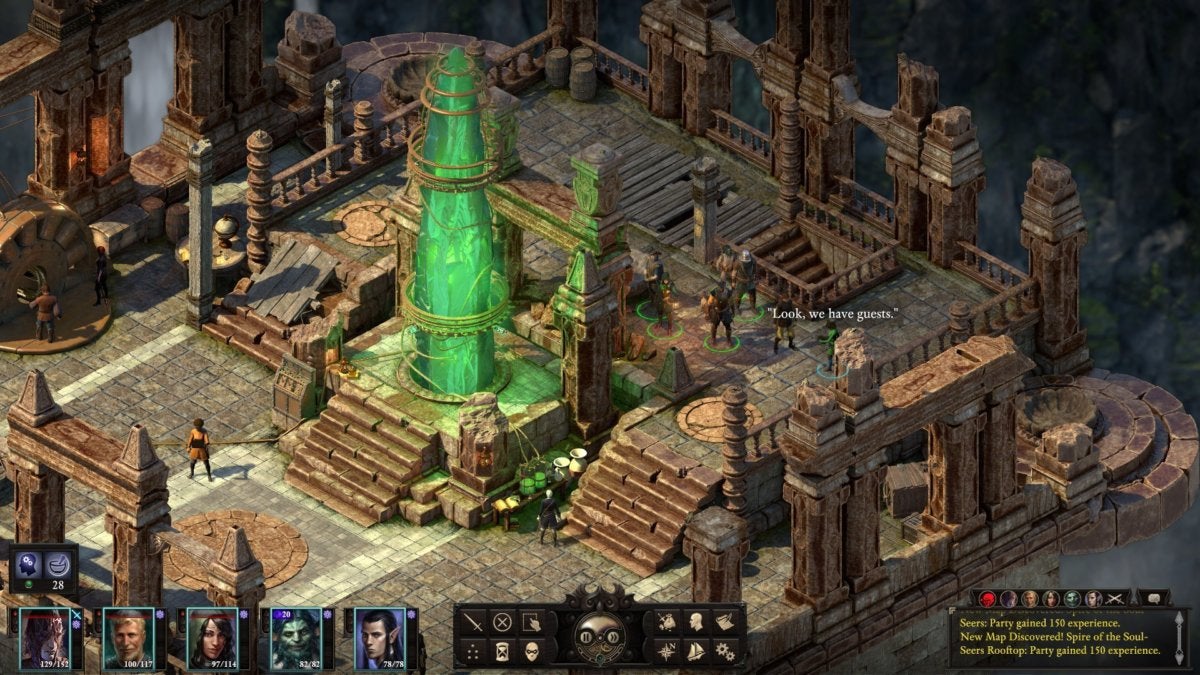
You arrive in the titular Deadfire Archipelago for reasons I'm abominate to spoil. Suffice information technology to enjoin, your amicable life in the fortress of Caed Nua explodes in spectacular fashion, and when the dust settles the gods demand your help again. As a Watcher, someone who can see and interact with the souls of the out of play, you'ray uniquely positioned to aid them.
 IDG / Hayden Dingman
 The travel leave send you back and forth across the Deadfire, putt you in contact with pirates and shady "trading companies" and slavers and ancient machinery and more. Obsidian's built exterior a hell of a public for Pillars of Eternity. It was the strongest part of the previous game, and information technology's even better here. Obsidian's pared back on the huge chunks of text a bit, and what's left maintains most of the flavor without making your eyes glaze finished. It's a joy to read, still the secondary dialogue from people wandering the streets.
Problem is, most of the game feels incidental. I've struggled to pinpoint wherefore. There's certainly "much" in Pillars of Eternity 2—a lot of dialogue, a lot of quests, a lot of areas to explore.
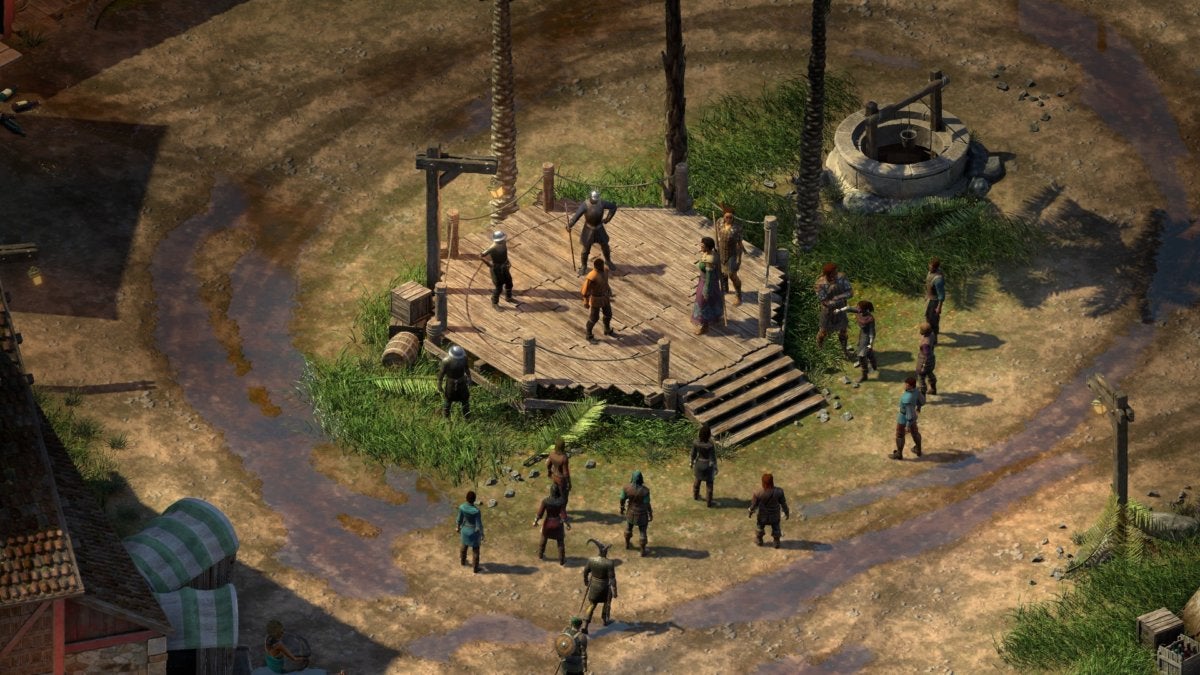
And early happening it arse feel like the game is full of potential. I was excited when I reached the first big city in Pillars of Eternity II, the stronghold of Neketaka. I spent probably 10 hours there, roily through backroom politics between the major factions—Principi (pirates), the Huana (rulers), and the two competing corporations of the Valian Trading Company and the Royal Deadfire Company.
 IDG / Hayden Dingman
 There's a good deal of complexity up front, all junto trying to undercut its rivals, and you rather mobile in between them entirely. A very Obsidian setup, and also evocative of Baldur's Gate Cardinal and the way of life it dumps you into the enormous city of Athkatla.
The rest of the Deadfire Archipelago is comparatively lifeless though. Pillars of Eternity II starts vehement, and it ends strong. Only the middle? It just screen out of winds its way to nowhere, for hours at one time.
The Deadfire is a very various sort of environment than the placid fake-Europe high fantasy of the past game. It's, well, islands. Gum olibanum you're quickly given command of a ship, your mobile base of operations for Pillars of Eternity II.
 IDG / Hayden Dingman
 It's a huge change. Pillars of Eternity was very much a Baldur's Gate sacred successor, with travel handled like the tabletop RPG Baldur's Gate was trying to emulate. Which is to say: The journey didn't substance much, only the destination. You travelled by waypoint, from point of interest to point of interest, with the lands in between glossed over.
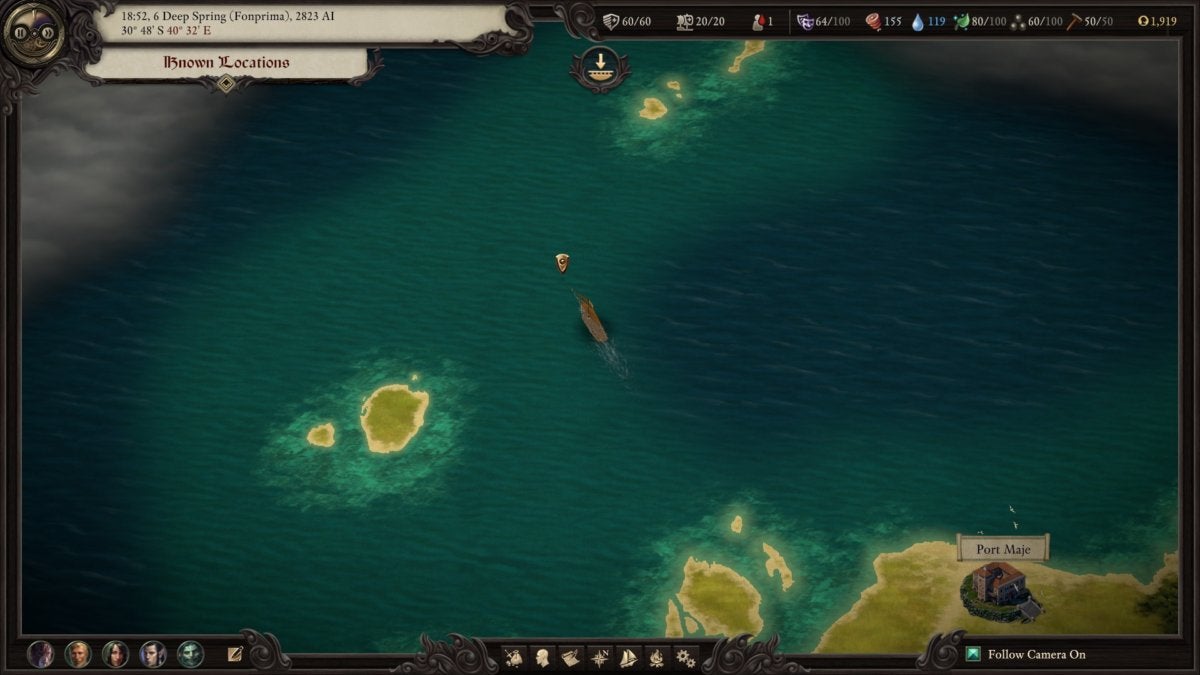
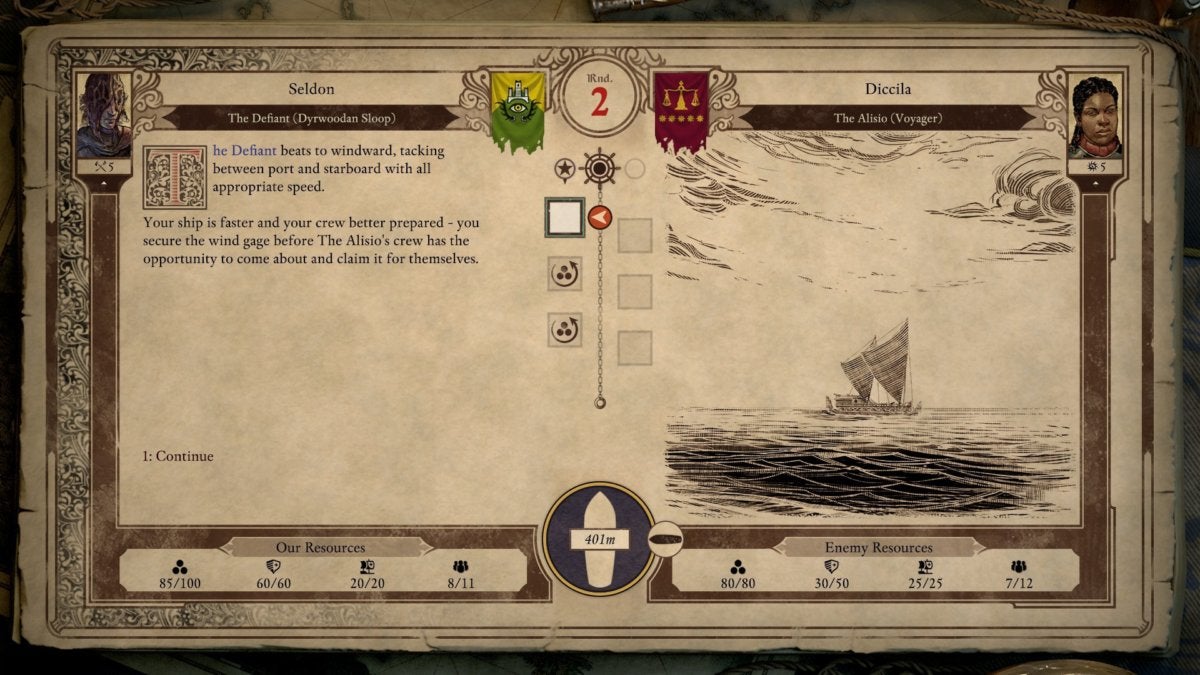
In Pillars of Infinity II, travel is an active set off of the escapade. You physically sail your ship around the archipelago, albeit from a top-down perspective, discovering islands and shipwrecks and strange oversea creatures on the way. In that respect's even up a unimportant management steady to it, with you responsible for supplying intellectual nourishment and drink and medicine to keep your crew happy. You'll too run into other ships on the Deadfire of course, at which sharpen the game turns into sea-battle-via-text-venture.
 IDG / Hayden Dingman
 It's brilliant. These battles quickly became unity of my favorite aspects of Pillars of Timeless existence II, truckage my ship to port and kindling totally cannons into the opposing ship, then closing in to cram their battered hull. Information technology's a perfect example of tech limitations generating a unique and interesting solvent.
Merely cracks start to register the longer you sail around the archipelago. Away from Neketaka, there are three or quartet "major" ports to discover. No of these towns have even a divide the complexity of the stronghold, with almost relegated to bare pit stops along the adventure. There's usually one main quest (issued by mortal in Neketaka) to convince you to visit, then maybe a second, minor quest once you're there. When those are finished, well, you honorable never go back.
That applies even when vast shifts in circumstance happen. You might, for instance, liberate a fort from a group of slavers, and later on doing so other faction moves in. It's cool to see that sort of dynamic commute, granted the locations in these sorts of games are usually so stagnant. And yet, once you've liberated the fort…nothing. You'd think the fortify's radical occupiers power let their own put on of quests to unveil, but no. They're just like "Cool, thanks for rental us have this fort and, uh, hither's your coins," and you sail into the old.
 IDG / Hayden Dingman
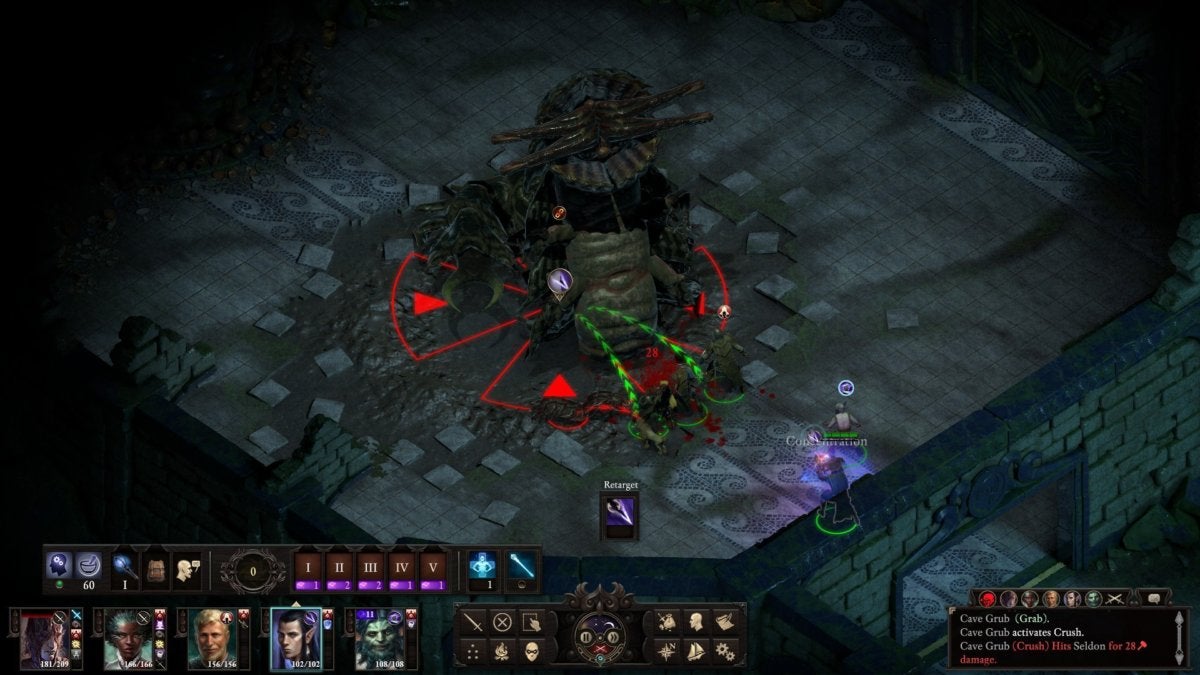
 And once more, these are the major settlements. All but of the Deadfire is symmetrical less reactive. Obsidian did a smart affair here, fashioning lots of littler and denser maps instead of the sprawling wildernesses from the original Pillars of Eternity and the Baldur's Logic gate-era games. Much of them are just generic combat encounters though, and although these peppered the forest of its predecessors, there's something discouraging about gliding to an uncharted island, fighting the four monsters waiting there for you, and then leaving again.
The minor one- and two-storey dungeons littered just about the map are a trifle amend, but again are frequently lacking in real context and have No core along the world free. You usually annoy to the lowest degree a short pursuance introduction saying, you know, "Go here and kill everyone." Merely seldom does anything amount to Sir Thomas More than that, and rarely do you bugger off a reexamination afterward, Oregon even a thank you from the person who gave you the quest in the first place.
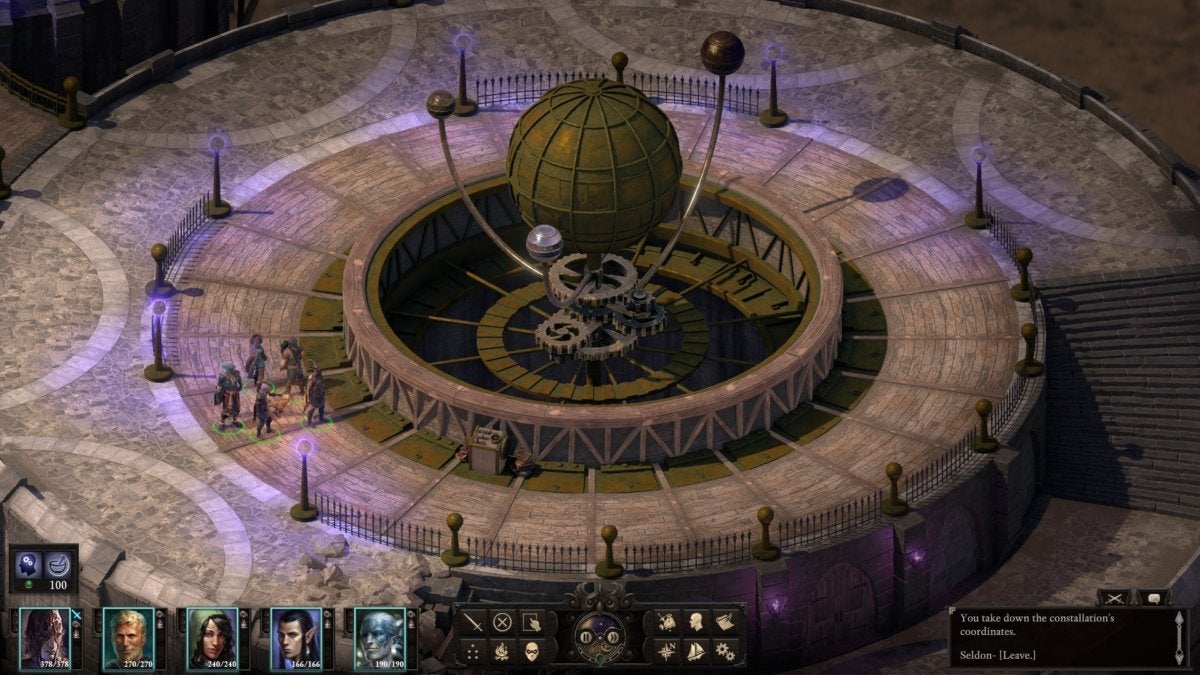
Companion storylines are weak, too. There are eight companions to find, and around half are from the first gamey. Those returning companions are a bit stronger, given another game's worth of linguistic context to avail pad their weak points. The unweathered additions are 1-greenbac archetypes though. Worse, the pacing of their unique quests is all off. This is a 50-minute game, and yet I'd committed some of my fellow traveller's stories in the first 10 to 15 hours. They had nil new to say to Maine for the rest of our time together.
 IDG / Hayden Dingman
 I seat't serve but compare that approach shot—a rattling Baldur's Gate manner approach, I might add—with last year's Divinity: Freehand Sin II, where I was still baring new details about my companions 80 or more hours in. Pillars of Eternity Two's relationships find vapid and artificial therein light.
The one standout improvement: Pillars of Eternity II's approach to loot. In that respect's gobs of trash, but also a bewildering amoun of unique items—poisoned swords, lighted axes, emotional state-reaping scythes, all with names and backstories. It's maybe my dearie separate of the game, forcing you to decide whether to use the spellbook you pilfered off that old lich Oregon maybe the i bequeathed you by a grumpy archmage. Your items wealthy person stories, and I forever prefer that to "Longsword +1" operating theater what have you.
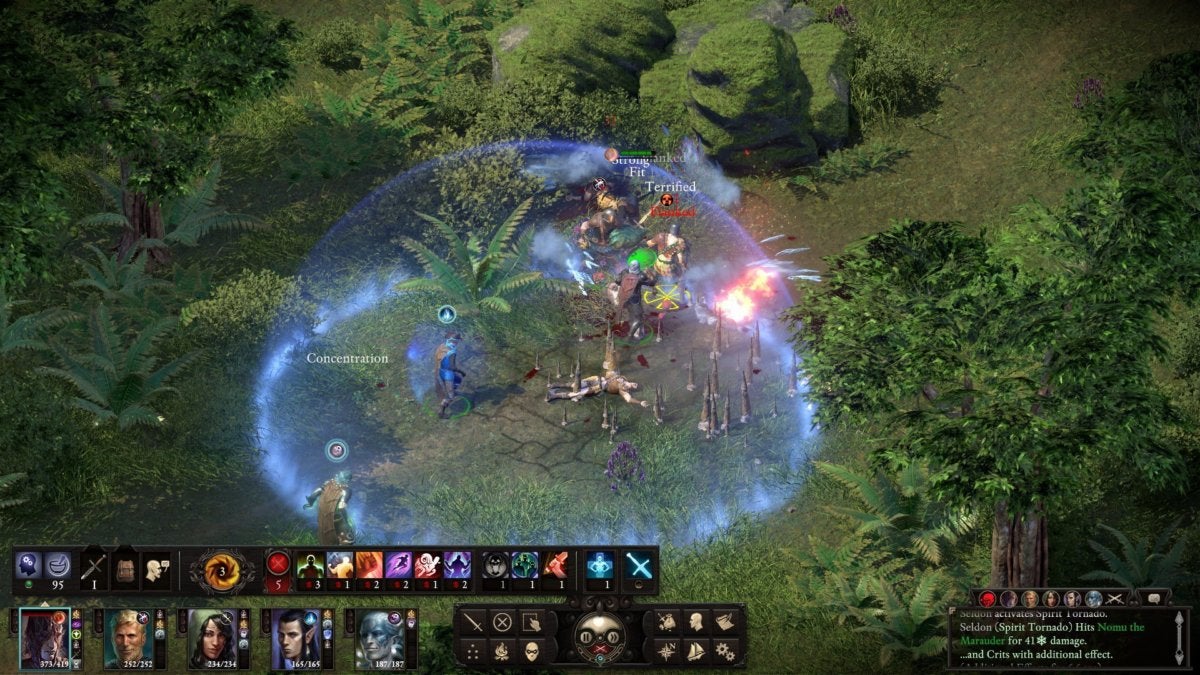
And speaking of battle, this is the best-playacting Infinity Engine-type game I've run through, surgery at any rate the smoothest. The rules governing classes and leveling are smart, with a system running behind-the-scenes to make sure low-level abilities remain alive later on, by increasing how much damage they do operating room how many projectiles they give the sack or what-have-you even off as you attain newer, flashier skills.
There's also a fourth-wall breaking encounter valuation, which helps prevent the random-flavor difficultness spikes the literary genre's had in the past. The original Pillars of Timelessness was selfsame traditional in its approach—the first sign you'd wandered into a high-level area was unremarkably when your company was obliterated in a single hit. Presumptively attributable the more freeform exploration in Pillars of Timelessness Cardinal, you can now see an encounter's suggested steady, and prepare fittingly.
 IDG / Hayden Dingman
 The game's easy. Surprisingly easy, for an Infinity Engine veteran. I played on the "Classic" difficulty, which gave Pine Tree State a fair sum of trouble at times in the first Pillars of Eternity, but I breezed through this ace. The final political boss engagement was longer, but not necessarily harder than anything else.
That's a snatch disappointing to me, but probably a rest period to those who don't love micromanaging during real-prison term-with-interruption fighting. Your party Bradypus tridactylus tin can mostly template itself to triumph outside a fewer fights, as long equally you're the earmark level, with you chiming in only to send a timely fireball towards your enemies.
Bugs
Apologies—this review's long, I know. Only I'd be neglectful though if I didn't spend some clock time talking about bugs. It's an Obsidian game, so as you'd expect there are a lot of them. More even, perhaps, than you'd expect. Trouble is, it's hard to tell how many of these bequeath make information technology from our pre-release review version into the final shipping free.
 IDG / Hayden Dingman
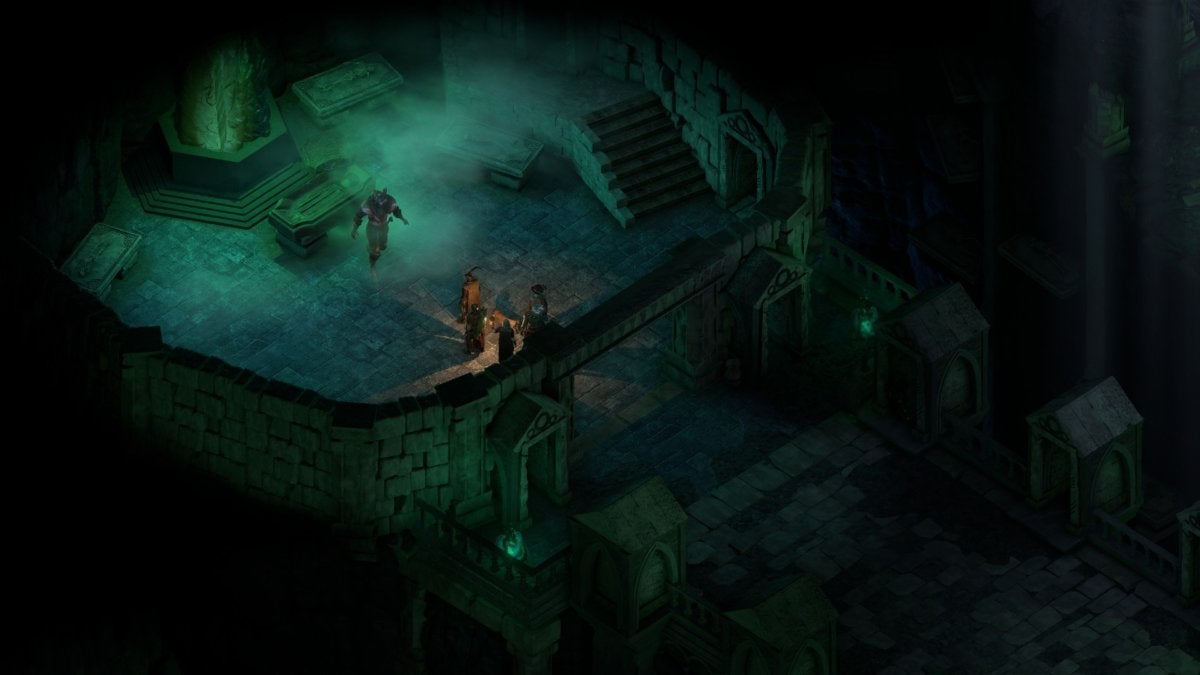
 I've suffered a significant number of crashes though. And anytime I played to a higher degree deuce-ac hours at a offer, I experienced significant slowdown, with sub-30 frames per second operation until I exited out and restarted. I've also had enemies I killed refuse to die, locking ME into eternal combat with a foe who crapper't personify targeted. The simply way to mend that one was to, once again, exit to screen background and boot the game.
I've had pursuit logic break, soh someone ordered me to talk to someone I'd already killed. I've received messages from characters claiming we'd never met, even though we had. I've had characters disappear from the map entirely. Whol told, I finished the game with three humble missions—meaning I could never complete them, and therefore never remove them from my log.
And most entertaining, I've had a drawbridge lower, so straightaway raise over again—but my characters could still cross the "raised" bridge.
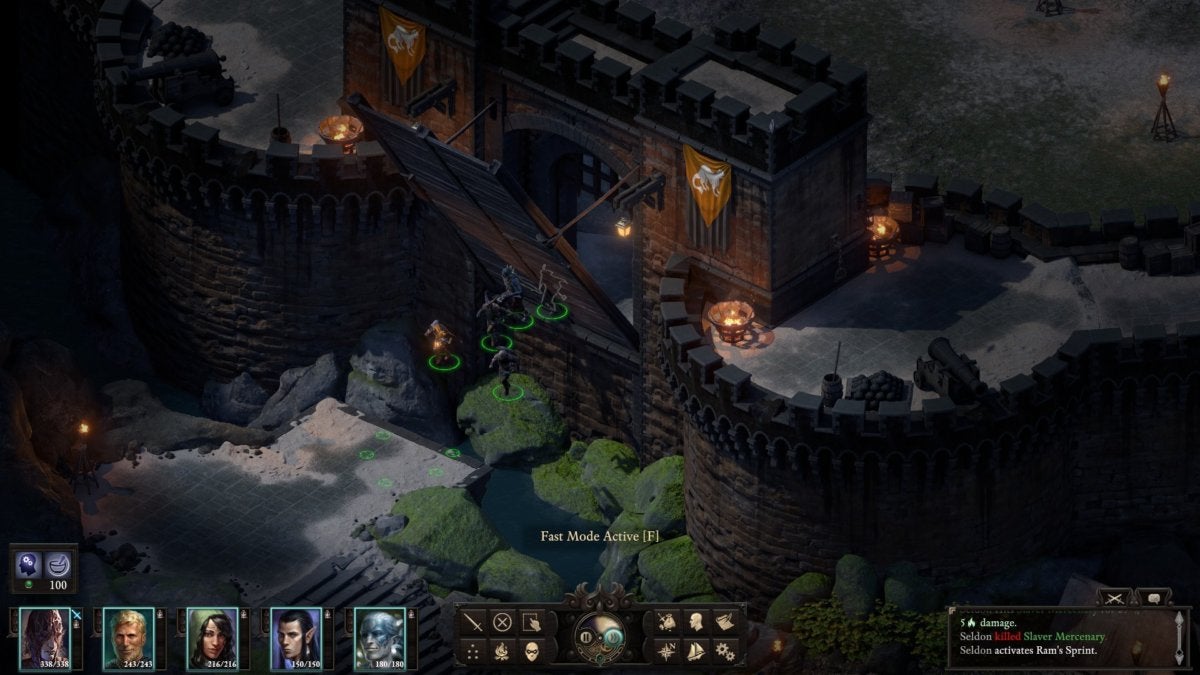 IDG / Hayden Dingman
 Oops.
Information technology's a bit of a mess. Fair warning.
Rear line
Pillars of Eternity felt like a solid foundation for a genre-defining sequel. Now, having finished said sequel, I feel some the Lapplander way. There are a great deal of absorbing ideas at play here, but mostly underutilized, and without the threads to splice it whol together.
Despite all my complaints though, I generally enjoyed Pillars of Eternity II: Deadfire. The central story is superior, with a muscular continuation of its predecessor's themes—and, mercifully, it's easier to abide by. The problem is in that respect's non much outside that central story. Pillars of Timeless existence II feels like a halt built off the backs of four or five senior "setpiece" moments, jaw-dropping floor beatniks with the kind of spectacle I didn't think was possible in an Infinity Engine-style game. If Pillars of Eternity II were only these moments, I believe I'd enjoy it punter.
Simply there's this entire Deadfire Archipelago to explore, and very little of IT worth exploring. As I said up top, Pillars of Eternity II feels self-contradictory with itself, cragfast betwixt missing to be a smaller, chronicle-driven experience and a larger, more knotty global. The end result is an awkward compromise at best.
Source: https://www.pcworld.com/article/401937/pillars-of-eternity-ii-deadfire-review.html
Posted by: schwartznothestal.blogspot.com
0 Response to "Pillars of Eternity II: Deadfire review: A strong ship in shallow waters - schwartznothestal"
Post a Comment